The Geometry of Absence: Alexander Archipenko and the Sculptural Soul of Modern Design
The dialogue between space and substance has rarely found a more profound architect than Alexander Archipenko. A titan of the 20th-century avant-garde, Archipenko did more than merely sculpt; he redefined the very geometry of the human experience. By introducing the revolutionary concept of the "void" as a physical presence, he challenged the centuries-old tradition of monolithic, solid forms, teaching the world that what is absent can be just as expressive as what is present. For the discerning collector and the modern interior enthusiast, Archipenko’s work represents the pinnacle of lyrical abstraction, a seamless marriage of intellectual rigor and sinuous, rhythmic beauty that continues to inform the most sophisticated silhouettes in contemporary design today.
-

-
Born in 1987 in Kyiv, Ukraine, Archipenko’s journey began amidst the rich cultural tapestry of Eastern Europe before he found his spiritual home in the bustling studios of Paris. Rejecting the rigid academicism of the École des Beaux-Arts almost immediately upon his arrival in 1908, he sought refuge in La Ruche, the legendary artist colony where he rubbed shoulders with the likes of Modigliani and Léger. It was here that Archipenko began to deconstruct the human form through the lens of Cubism. Unlike his contemporaries who were content to experiment on canvas, Archipenko was the first to translate these fractured planes into three dimensions, fundamentally altering the trajectory of modern sculpture by seeking a "universal harmony" that transcended mere representation.

-

-
Archipenko’s most enduring legacy is perhaps his mastery of the "negative space." Before his intervention, sculpture was defined by the mass of its material bronze, stone, or wood. Archipenko inverted this logic, famously stating that "sculpture may begin where space is encircled by the material." In iconic works like Walking Woman, he replaced solid limbs with elegant perforations and replaced convex muscles with concave dips. This interplay of light and shadow created a "living" surface that changed as the viewer moved around the piece, a quality of "kineticism" that would later become a cornerstone of both his artistic philosophy and the high-end furniture designs inspired by his aesthetic.

-
Beyond his structural innovations, Archipenko was a pioneer of materiality and colour, introducing the concept of "sculpto-painting." At a time when sculpture was almost exclusively monochromatic, he dared to incorporate vibrant pigments, wood, glass, and even metals into his reliefs. These works bridged the gap between the two-dimensional and the three-dimensional, creating a textured, multi-sensory experience that anticipated the eclectic material palettes of modern luxury interiors. His willingness to experiment with clear acrylics and internal illumination in his later years further cemented his reputation as a visionary who saw no boundary between the industrial and the ethereal, a trait that makes his influence particularly resonant in the world of high-concept furniture.
-


-

-
As an educator and mentor, Archipenko’s influence rippled through the decades, touching the work of giants such as Henry Moore and Barbara Hepworth. After moving to the United States in 1923, he established influential art schools in New York and Chicago, where he continued to preach the gospel of abstraction and movement. His fascination with the "eternal feminine", the abstraction of the female form into a series of elegant, flowing lines became a hallmark of the Mid-Century Modern movement and beyond. To own a piece of furniture that echoes Archipenko’s vision is to invite a century of intellectual history into one's home, acknowledging a lineage of design that values the soulful curve over the sterile line.


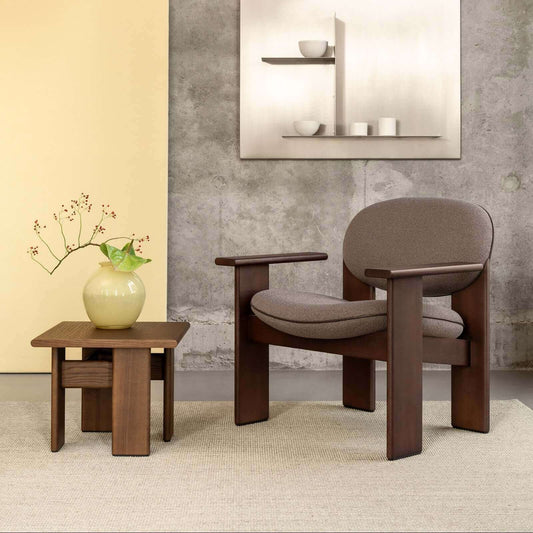
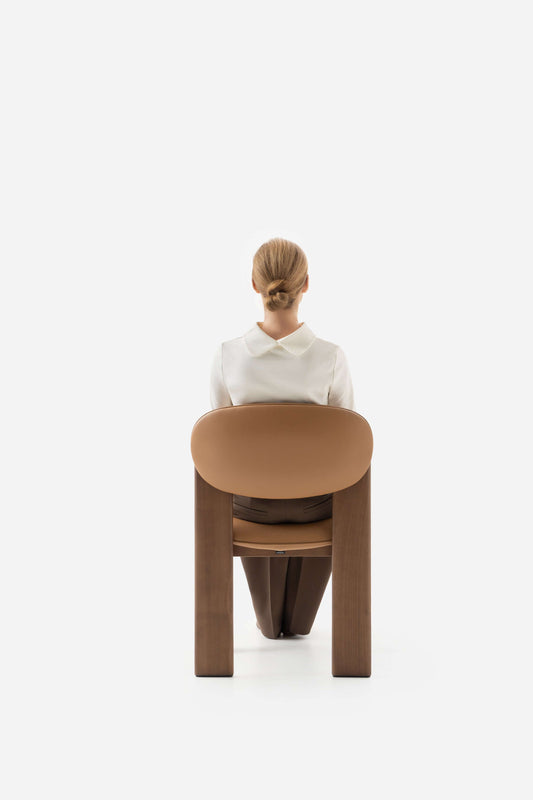
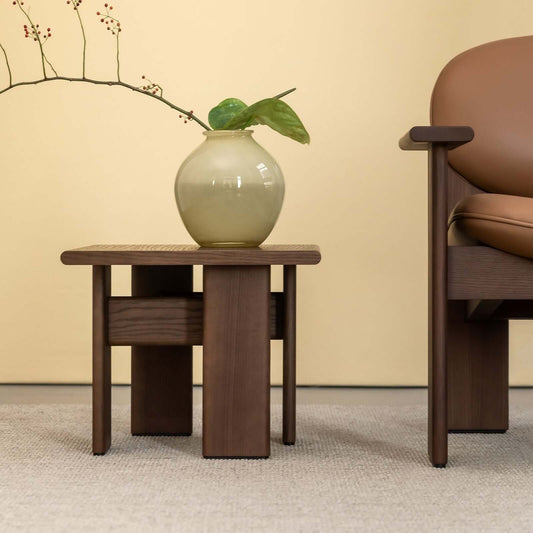
This storied legacy finds a contemporary crescendo in the "Archipen Chair," a flagship piece from the Ukrainian design house NOOM. Designed by Kateryna Sokolova, the chair is a direct homage to Archipenko’s Archipentura, his patented invention for kinetic painting that explored the illusion of movement. The chair captures this spirit through a minimalist yet daring graphic silhouette; its flat, ash wood legs are twisted in opposing directions, creating a visual dynamism that suggests the chair is caught in a moment of graceful rotation. This subtle manipulation of geometry mirrors Archipenko’s own deconstruction of form, resulting in a piece that functions not just as a seat, but as a "functional artwork" that anchors a room with its sculptural identity.

-

-
Ultimately, the enduring appeal of Alexander Archipenko lies in his ability to make the complex feel effortless. Whether in a museum gallery or a meticulously curated living room, his aesthetic vocabulary, defined by the rhythm of the void and the elegance of the abstracted curve, speaks to a desire for sophistication that is both timeless and transformative. As we look to the future of interior design, we find ourselves returning to the lessons of the master: that true luxury is found in the balance between what we see and what we imagine, and that a single, well-placed line can hold the weight of the world.


-
Archipen Lounge Chair
Vendor:NoomRegular price From 4,200.00Regular priceUnit price per -
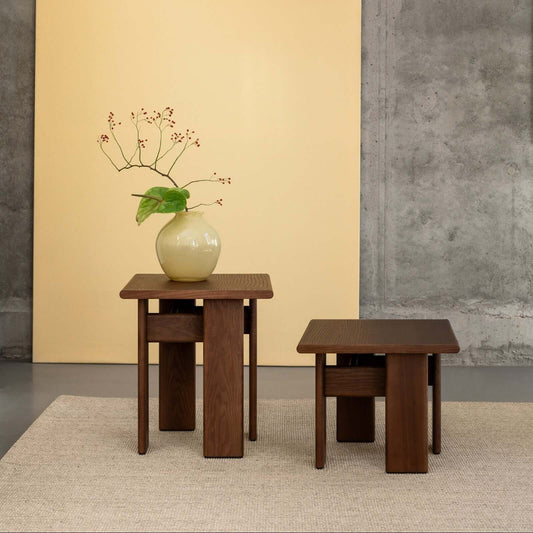
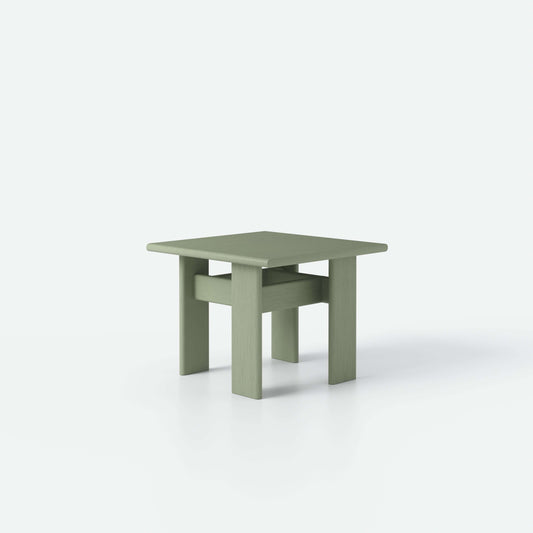
Archipen Table 1
Vendor:NoomRegular price From 1,550.00Regular priceUnit price per -
Archipen Table 3
Vendor:NoomRegular price From 1,650.00Regular priceUnit price per -
Archipen Table 2
Vendor:NoomRegular price 1,450.00Regular priceUnit price per